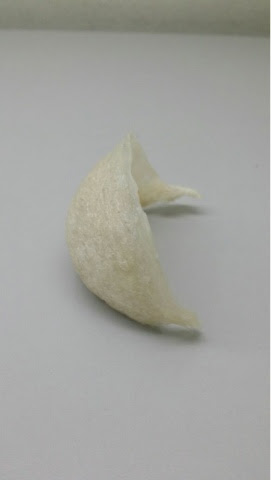
Edible-bird's nest (EBN) : Anti-Aging Food. The general guidelines for the anti-aging diet are: keep your calorie consumption and saturated fat intake down; eat plenty of wholegrain, oily fish , fresh fruit and vegetables; and cut down on salt and sugar. In addition to these general guidelines, there are specific foods that have a role in anti-aging and that you should regularly include in your diet such as edible bird's nest soup.
Saturday, May 9, 2015
Koperasi Walit Sarawak Berhad (Dalam Penubuhan)
Wednesday, March 25, 2015
Indonesia may export birdnest to China
The launch of exports of bird’s nests to China marked the 65th anniversary of theestablishment of diplomatic relations between the two countries, which will becommemorated on April 13, said Soegeng Rahardjo, Indonesia ambassador to China inBeijing last Thursday.
The ambassador made his remarks at a press conference on Indonesian bird’s nest exportsto China in the Indonesian Embassy. “The first batch of bird’s nests were exported fromIndonesia to Beijing, Shenzhen and Guangzhou on Jan. 29. This is an important milestoneafter a five-year-long process,” he said.
Due to food safety issues in 2011, the Chinese Accreditation and CertificationAdministration (CNCA) temporarily stopped bird’s nest exports from Indonesia. After along process, the two countries finally agreed to reopen trading. Now, six Indonesiancompanies have been granted licenses by the CNCA to export the product to China.
Soegeng emphasized that Indonesia is able to produce birds’ nests that meet quality andfood security standards in China.
Gu Shaoping, director general of the CNCA, remarked that China will increase itssupervision of the trade to ensure that the exports from Indonesia are safe forconsumption. Furthermore, a traceability system has been introduced to ensure comprehensive supervision.
According to Soegeng, Indonesia is the biggest producer of bird’s nests in the world,accounting for 70 percent of the total, while China is the biggest importer. Therefore, the provision of export licenses will benefit both countries. – People Daily
Thursday, February 5, 2015
New GMP for raw unclean EBN
KUALA LUMPUR: THE Federation of Bird’s Nest Farmers of Malaysia (GPWM) not happy over a regulation by the Department of Veterinary Services (DVS) that allegedly affects the export of raw edible bird’s nest from Malaysia.
Its president, Allan Ho, said the issue was in regards to regulations governing the export of raw uncleaned bird’s nest.
Exported raw bird’s nest falls under two categories, cleaned or uncleaned, with the latter forming the bulk of exports to Malaysia’s most lucrative bird’s nest market, China.
He said early last year, the Department of Standards Malaysia had been directed to draw up new standards for raw uncleaned bird’s nest, with the final draft displayed for public viewing until Oct 19 last year.
However, Ho said, DVS also drafted the “Good Manufacturing Practice for Raw Unclean Edible Bird’s Nest” code, which was allegedly similar to an earlier code.
“China has noted that both categories (cleaned and uncleaned bird’s nest) had been placed under one category, despite being different.”
He said it was quite difficult the raw uncleaned bird’s nest to meet the microbiological and chemical parameter requirements under a single specification.
“This will affect the export of raw uncleaned bird’s nest from Malaysia, which will harm the financial position of more than 60,000 farmers.”
Ho said since the uproar, the farmers had been waiting for the green light to export raw uncleaned bird’s nest from China adding that “since last year, only raw clean bird’s nest has been allowed to be exported to China by CNCA.
He said this was worrying, as 95 per cent of the country’s bird’s nest products comprised raw uncleaned bird’s nest. The new regulations set by China he said, made it difficult for the goods to be exported.
The Department of Standards Malaysia and DVS could not be reached for comment.
NSTP
Thursday, December 25, 2014
Efforts to develop swiftlet farming continues: Minister
PUTRAJAYA: Efforts to develop the swiftlet farming industry continue despite the arising issues which threaten the overseas market of Malaysian bird's nests, especially to China.
Agriculture and Agro-based Industry Minister Datuk Seri Ismail Sabri Yaakob said among the issues or problems faced was restricted sales of the product which affected returns on investment in the industry and which also caused falling market price of the product.
"However, the Government is not doing nothing and but has directly taken the initiative to address the problems through high-level discussions and negotiations," he said at the opening of the Edible Bird's Nest Industry Conference 2014, here, Tuesday.
His speech text was read out by the ministry's Deputy Secretary-General Datuk Raihan Sharif.
The Minister said that through such efforts, Malaysian bird's nests could be exported again to China through eight local companies which had been certified by the authorities in China.
He said the second batch comprised 15 companies which had been audited by the Certification and Accreditation Administration of the People's Republic of China (CNCA) and were expected to receive the audit results soon, he said.
Ismail Sabri said the Veterinary Services Department (VSD) had also sent in applications to the CNCA for the third group involving nine more companies to export swiftlet bird's nests to China.
"The VSD is still receiving many applications from companies which are keen to export bird's nests to China.
The issue of bird's nest export from Malaysia to China arose in July 2011 after the media in China questioned the quality of the product.
Inspections carried out found that the red bird's nests contained nitrates that exceeded 1,000ppm, which could pose a risk to the consumers' health.
China, however, reportedly withdrew the import ban on Malaysian swiftlet bird's nests from last Dec 25.
Ismail Sabri said the VSD had organised courses related to Good Manufacturing Practice (GMP) for those involved in processing bird's nests so as to meet the CNCA's audit quality requirements.
The Minister said Malaysia had exported 120 tonnes of bird's nests worth RM114 million in the first 10 months of this year and the volume was expected to increase to 150 tonnes by the year-end.
He said the bird's nest industry was a high-impact entry point project (EPP) with a targeted export of 870 tonnes worth RM5.2 billion by 2020. – Bernama